WHAT IS FISH STOCKING?
Fish stocking is the practice of raising fish in hatcheries—indoor facilities where fish eggs are artificially bred and hatched, and the young fish are raised in a controlled environment—and then releasing them into lakes, ponds, rivers, and streams. State and local agencies do this to introduce new species for sport and to increase the number of people purchasing fishing licenses, as some of the agencies’ funding comes from these sales.
Routine fish stocking threatens biodiversity1, 2, 49 and native fish, 3, 4, 5, 6, 7 results in extremely high fish mortality,8 and continues without adequate ecological impact studies on Massachusetts ecosystems.
- Stocked fish, especially non-native species:
- Displace wild fish from their natural habitats
- Introduce diseases and parasites Disrupt the natural balance of aquatic ecosystems
- Have high mortality rates
- Negatively impact native aquatic organisms, including other fish species
Redirecting funding toward habitat restoration, science-based conservation, and accessible, hands-on, community-based education would better protect Massachusetts rivers and lakes and align with the state’s biodiversity mandate.
Why BEAT is taking a stand
Routine stocking of non-native fish undermines biodiversity, pollutes waterways, and distracts from the work that truly protects rivers and native species.
Ending the practice would align Massachusetts fisheries and wildlife management with the Governor’s biodiversity mandate and reflect science-based stewardship.
We believe it is time to move beyond stocking fish destined to die and invest instead in healthy ecosystems that sustain life for generations.
Watch our in-depth webinar that provides a science-based overview of fish stocking in Massachusetts.

YOUR VOICE MATTERS.
You can make a difference by urging state officials to rethink fish stocking in Massachusetts.
Reach out as an individual or on behalf of an organization—every call, email, and letter counts.
ASK THEM TO STOP STOCKING YOUR LOCAL WATERBODY! Refer to/use our email templates for individuals and for organizations/groups

It Works!
After more than 60 people emailed and wrote to the MassWildlife Board, stocking in the upper Deerfield River ended in early 2025.
Public pressure can lead to real science-based changes in how we manage wild fish, their natural habitats, and our native ecosystems.
And check out BEAT’s pamphlet on this issue & stop by our center to pick up a few to share!
View the PamphletStocked Massachusetts Waters
This interactive map was created using data available on MassWildlife’s page on Mass.gov. Click the map legend to see what each color indicates. You can also click a specific point to see which waterbody it is, the town it’s in, and whether it’s stocked in spring, fall, or both seasons.
Fish Stocking Is Ecologically Unsound and Conflicts with the Commonwealth’s Biodiversity Commitments
Fish stocking conflicts with Governor Healey’s Biodiversity Mandate. Under Governor Healey’s Biodiversity and Conservation Mandate, all executive departments and agencies are required to support comprehensive biodiversity conservation goals.21 As stated in the mandate: “All executive department offices and agencies shall support the Commissioner of the Department of Fish and Game in this comprehensive review of biodiversity conservation goals.” Routine stocking of non-native fish is fundamentally at odds with this mandate. Rather than protecting biodiversity, stocking introduces non-native species that alter food webs, increase competition, and weaken native ecosystems.1, 2, 22
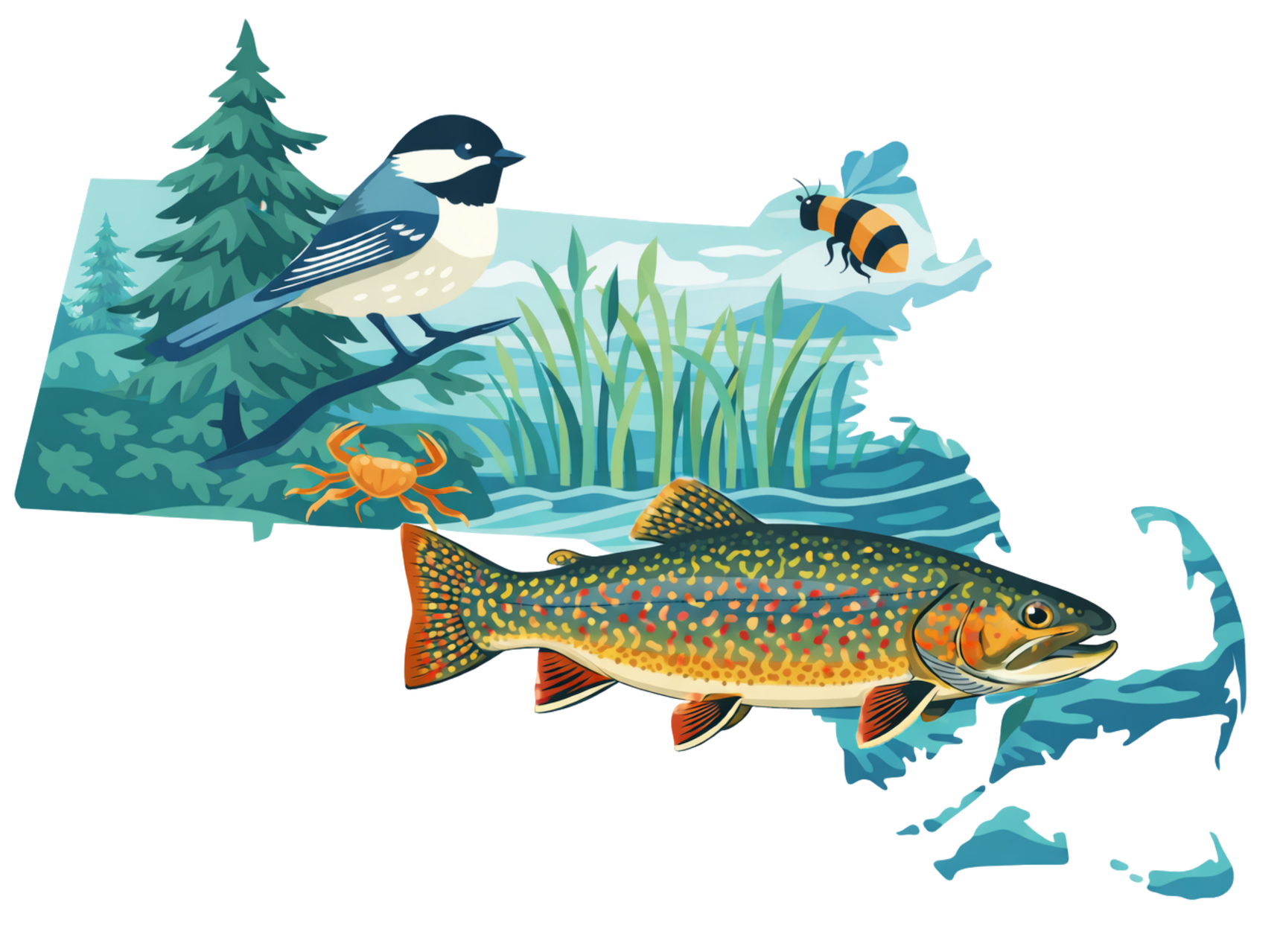
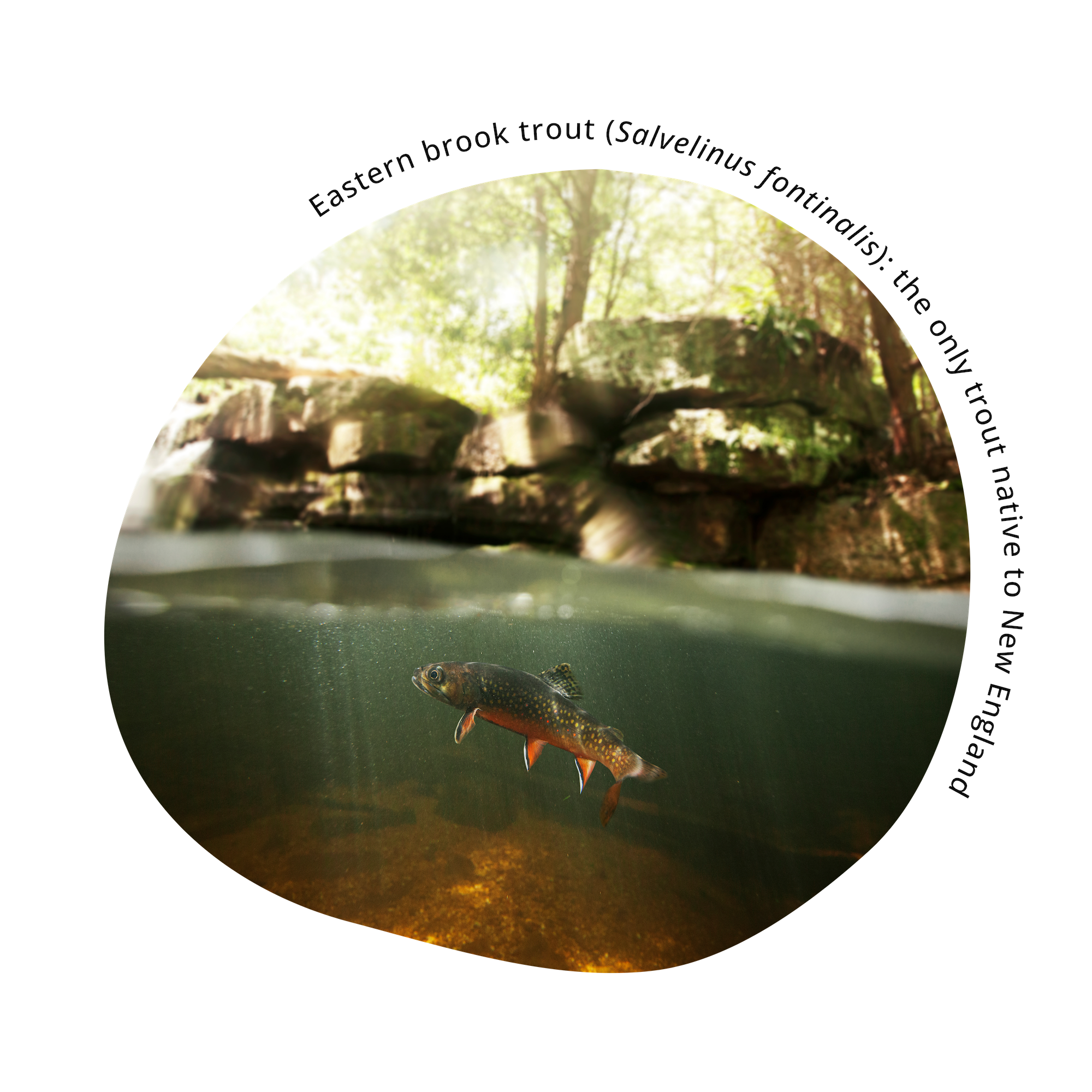
Eastern brook trout (Salvelinus fontinalis) provide a clear, local example of the responsibility described above. MassWildlife identifies brook trout as a “Species of Greatest Conservation Need” in the federally mandated Massachusetts State Wildlife Action Plan. Brook trout are not alone. The Commonwealth also identifies numerous other native freshwater fishes—including blueback herring, alewife, American shad, American eel, white sucker, slimy sculpin, banded sunfish, creek chubsucker, swamp darter, tessellated darter, spotfin killifish, common shiner, sea lamprey, blacknose dace, longnose dace, and creek chub—as Species of Greatest Conservation Need. In addition, the shortnose sturgeon is federally listed as Endangered under the Endangered Species Act. These designations reflect the Department of Fish & Game’s own recognition that many native fish species require focused conservation efforts to prevent further decline.
Because brook trout are experiencing documented population decline, they fall squarely within the category of species that require targeted conservation action. Under the Commonwealth’s biodiversity and conservation framework, species in decline warrant clear, species-specific management measures—whether through formal conservation plans or enforceable management standards—with defined objectives, monitoring benchmarks, and adaptive strategies incorporated into agency operations.
Continuing stocking of non-native predatory fish species in waters that still support brook trout and other native Species of Greatest Conservation Need (SGCN) conflicts with this responsibility, particularly in the absence of enforceable protections designed to prevent further population decline.
Native Brook Trout are in decline, and stocking adds pressure
It is undisputed that eastern brook trout populations are declining. Across its native range, brook trout populations are estimated to have declined by approximately 50% over the last 25 years, due to habitat loss, invasive species, and climate change.24, ,25, 26 Brook trout depend on cold, clean, flowing water and are highly sensitive to warming temperatures.
As climate change increases temperature variability, brook trout are increasingly outcompeted and displaced by non-native brown trout (Salmo trutta) and non-native rainbow trout (Oncorhynchus mykiss),27, 28, 29, 30 which are more aggressive and can tolerate warmer and more variable conditions.7 Stocking brown trout and rainbow trout into systems that still support eastern brook trout and other SGCN imposes competitive pressure and risks accelerating declines in native populations.27, 31, 32, 56 Rainbow and brown trout tend to occupy a higher trophic position than our smaller native brook trout. These two non-native species function as more top-level predators in freshwater ecosystems, feeding on other fish and prey that are higher up the food web.33, 34
While MassWildlife has conducted some studies on brook trout, it has not examined the impact of regular stocking of non-native fish on native aquatic species. Other peer-reviewed research conducted in U.S. states has found significant evidence that removing brown and rainbow trout from brook trout-supportive streams is a promising management strategy for the conservation of native brook trout and other non-game native fish.5, 7, 29, 30, 35, 36
Brook Trout Populations Overlap With State Stocking
Map Note: This interactive map was created using data from MassWildlife’s trout stocking report and catchment and patch scale assessments from the Eastern Brook Trout Joint Venture (EBTJV). EBTJV uses a predictive model to estimate the presence of eastern brook trout in areas upstream of sampled locations. Across the region—from Georgia to Maine—this includes hundreds of thousands of small catchments (typically 1–2 km in length), many of which have predicted salmonid occupancy. Given the scale of the dataset, it is not feasible to verify each catchment through fieldwork or manual review. As a result, these data are best used to understand broad, landscape-level patterns rather than conditions within specific stream reaches.
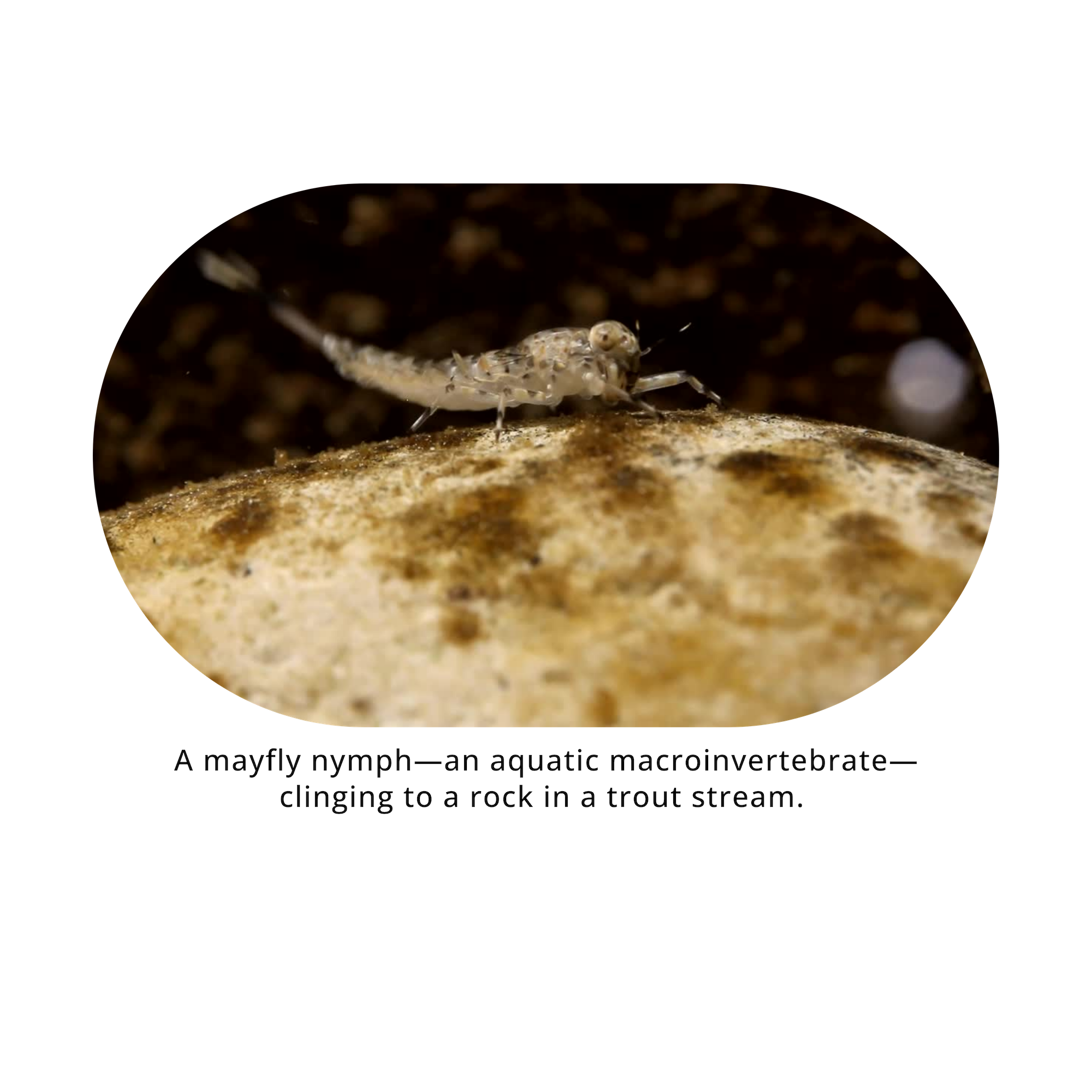
Non-native fish disrupt food chains & ecosystem function
Non-native fish can have significant impacts on aquatic food chains, including:
- Reducing zooplankton and phytoplankton populations37, 38, 39
- Impacts to invertebrate communities1, 4, 8, 40, 41
- Causing declines in the abundance of native fish species5, 6
- Increasing algal biomass,1 which reduces oxygen levels and degrades water quality
- Increasing turbidity, which harms photosynthetic aquatic plants38
- Disrupting the trophic cascade that supports healthy ecosystems22, 38, 39, 41
These disruptions affect not only the food resources available to native trout, but also aquatic and terrestrial ecosystems—including insects, plants, birds, and other organisms throughout connected watersheds.22, 41
In addition, non-native fish can indirectly support other invasive species.42, 43 For example, stocking can bolster populations of the Chinese mystery snail,38 an invasive species present in Massachusetts that outcompetes native snails and further disrupts food webs and ecosystem balance.
Fish stocking produces pollution and releases chemicals in rivers and streams
Raising hundreds of thousands of fish in hatcheries and repeatedly introducing them into natural waterways is ecologically unsound and environmentally harmful. Hatchery operations generate pollution,9 including greenhouse gas emissions,10 wastewater discharge,11 and nutrient loading into rivers and streams.12
Hatcheries require large amounts of clean water and significant energy to maintain artificial growing conditions. The wastewater they discharge contains fish waste, uneaten feed, and treatment chemicals. Because hatcheries discharge pollutants directly into waterways, they require National Pollutant Discharge Elimination System (NPDES) permits under the Clean Water Act.
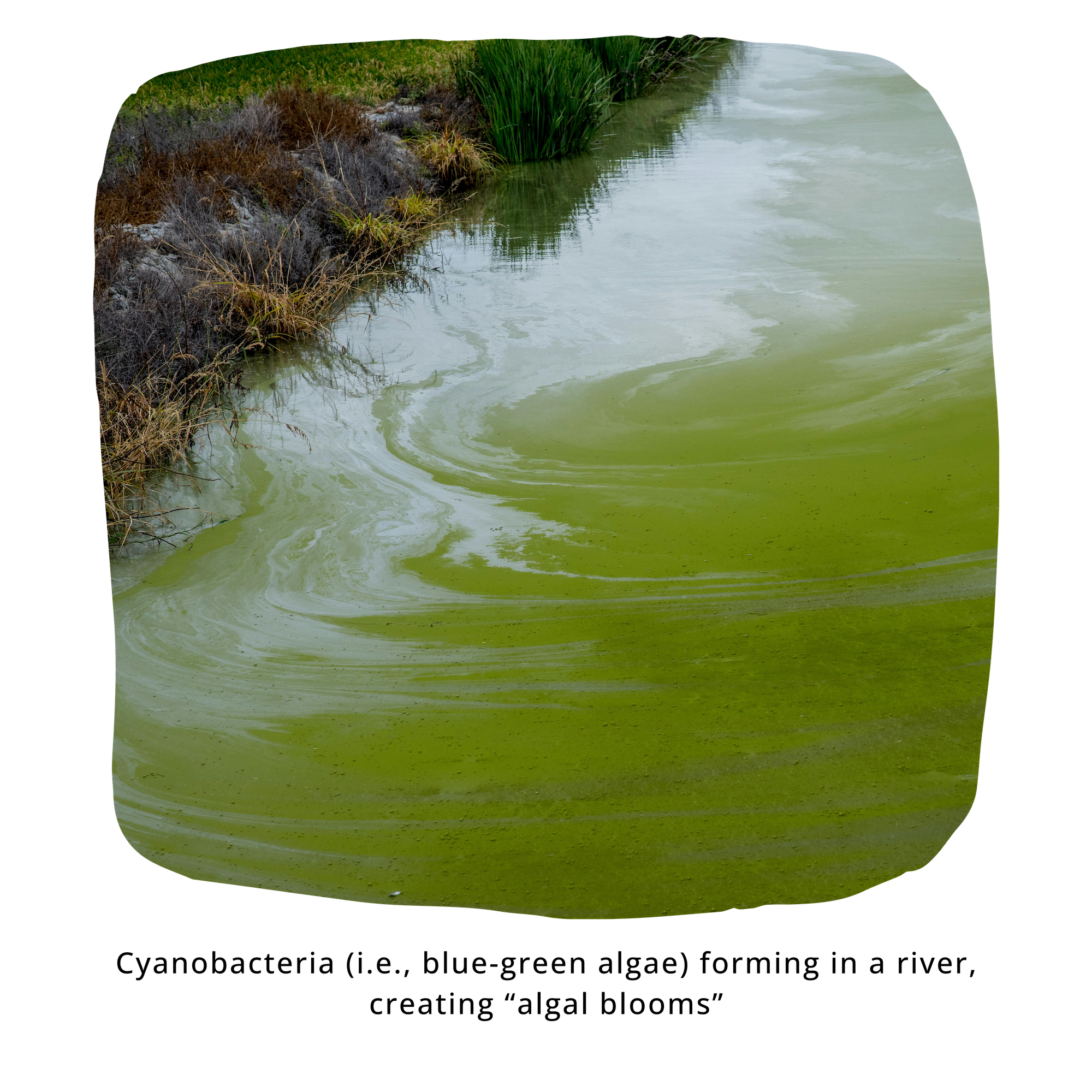
Discharge from hatcheries can contribute to excess nutrients, particularly phosphorus, into waterways. Elevated nutrient levels can fuel harmful algal blooms and reduce oxygen levels, sometimes creating what are known as “dead zones” where aquatic life struggles to survive.11
A recent example of this occurred in 2022, when the Conservation Law Foundation filed a lawsuit against New Hampshire Fish and Game because one of its hatcheries was discharging significant amounts of phosphorus into the Merrymeeting River, causing dangerous algal blooms in a downstream lake.12
Despite MassWildlife’s stated commitment to preserving clean water, four of its hatcheries have violated their NPDES permit within the last three years (as of early 2026).13
Looking beyond their environmental impacts, fish hatcheries also share many characteristics with industrial animal production facilities (i.e., factory farms or CAFOs). Fish are raised at extremely high densities in artificial conditions that bear little resemblance to natural ecosystems, creating environments where diseases and parasites can spread readily. Like other forms of intensive animal agriculture, hatcheries rely on manufactured feed formulations containing dozens of ingredients, many of which are derived from industrial agriculture or other animal production systems and also contain antibiotics.54
Because hatcheries concentrate hundreds of thousands of fish in confined spaces, they routinely rely on chemical treatments to control disease and improve survival.
- MassWildlife uses the following:
- Florfenicol: a broad-spectrum, fluorinated synthetic antibiotic that via medicated feed to treat bacterial infections.
- Chloramine-T, a biocide, to treat Bacterial Gill Disease (BGD)
- Hydrogen peroxide as a fungicide treatment
- Salt, which is applied through their hatcheries’ flow-through systems as an osmoregulatory aid, a stress reliever, and an antiparasitic.
This means that MassWildlife is releasing fluorinated synthetic antibiotics, biocides, and other chemicals, as well as salt, directly into Massachusetts waterways via their wastewater discharge.14
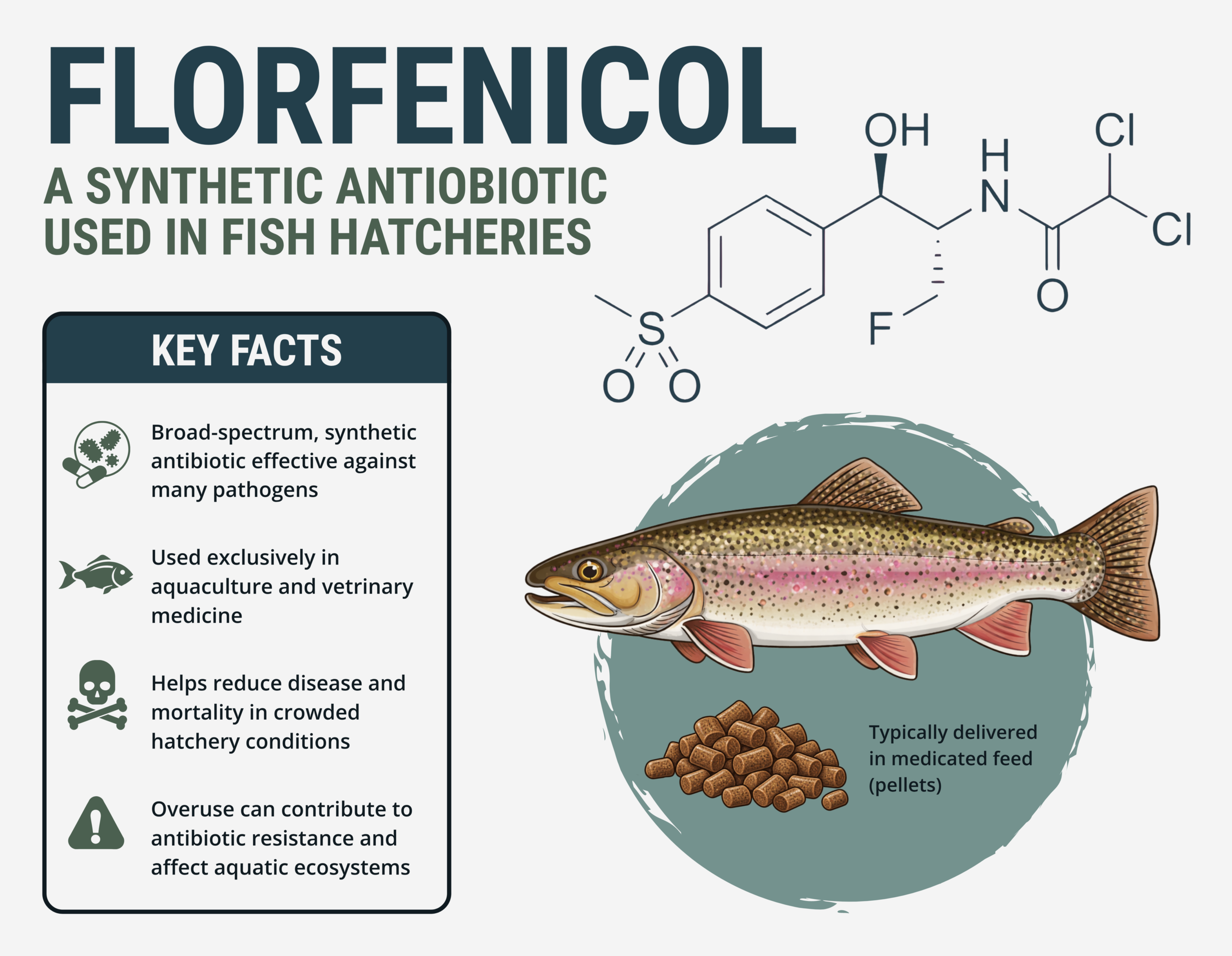
Antibiotics released into waterways
Antibiotic resistance occurs naturally, but decades of excessive antibiotic use have accelerated its spread. This creates selective pressure that allows resistant bacteria to survive, multiply, and share resistance genes. Those genes can spread through water, biofilms, and even in the absence of antibiotics — sometimes reinforced by other pollutants like heavy metals.
In fish production, antibiotics are used to prevent and treat disease in densely packed conditions. Studies show that up to 80% of antimicrobials administered to fish can be excreted in active form through urine and feces. That means these compounds can enter surrounding waters, where they may contribute to the development and spread of antibiotic-resistant bacteria.
Antibiotic resistance is already a major global public health crisis, responsible for millions of deaths each year, and public health experts warn it will continue to worsen with excessive or unnecessary use in agricultural systems.
Salt pollution affects freshwater ecosystems
Salt is commonly used in fish hatcheries to reduce stress, treat parasites and fungal infections, and improve fish survival. However, when salt enters rivers and streams through hatchery wastewater, it can contribute to rising salinity in freshwater ecosystems—an issue that’s already occurring in many rivers across the globe, primarily due to human activities such as salting roads during winter.15 Even relatively small increases in salinity can disrupt the delicate balance that freshwater plants and animals have evolved to tolerate.
Elevated salt concentrations can impair the growth, reproduction, and survival of aquatic organisms, alter community composition, and reduce biodiversity.16 Salt can also affect water quality by changing the movement and availability of nutrients and metals in sediments, potentially increasing toxicity of other pollutants.17 Although salt occurs naturally, repeated or excessive discharges can have lasting ecological consequences, particularly in smaller streams where dilution is limited.
Pollution concerns do not end when hatchery fish leave the facility. Stocking itself introduces large amounts of fish biomass into aquatic ecosystems over a very short period of time. When a significant portion of those fish die quickly, decompose, or are consumed in unnatural pulses, it raises concerns about additional nutrient pollution. Research indicates such events can contribute excess nutrients to waterways, causing less oxygen and poor water quality, and disrupting ecosystem function.18, 19, 20
Hybridization weakens wild populations
Stocking weakens wild populations at the genetic level;43, 44 if hatchery fish interbreed with wild populations, the result is hybridization—the process by which two different species successfully breed and produce offspring— which weakens the genetic adaptations that wild fish have developed over generations.45, 46
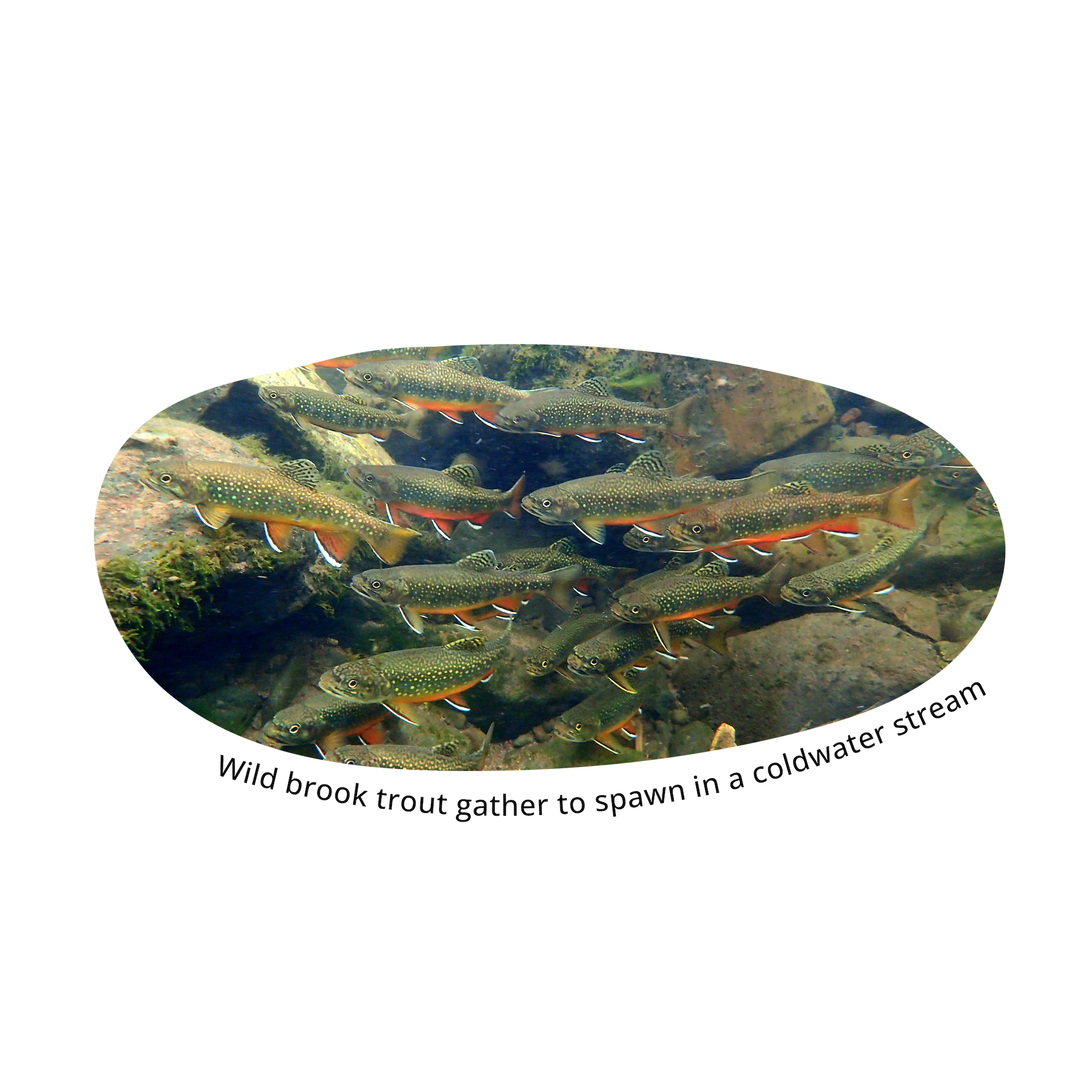
This loss of local adaptation reduces:
- Fitness
- Disease resistance
- Reproductive success
- Long-term survival
For native trout already stressed by climate change and habitat degradation, genetic dilution further undermines population resilience. Stocking doesn’t just add fish, it can erode the genetic strength of wild populations.
Hatchery trout are raised knowing most will die shortly after release
Stocked fish experience extremely high mortality rates shortly after release. Studies routinely document mortality rates ranging from 42.5% to over 90% within weeks to months.
Examples include:
- A New York study documenting 99.9% mortality over two years18
- A Housatonic River study that failed to recapture 67.5% of fish released in the fall, suggesting high mortality 47
- A MassWildlife study on the Swift River, showing that 50% of rainbow trout and 33% of brown trout were unaccounted for just one week after stocking 48
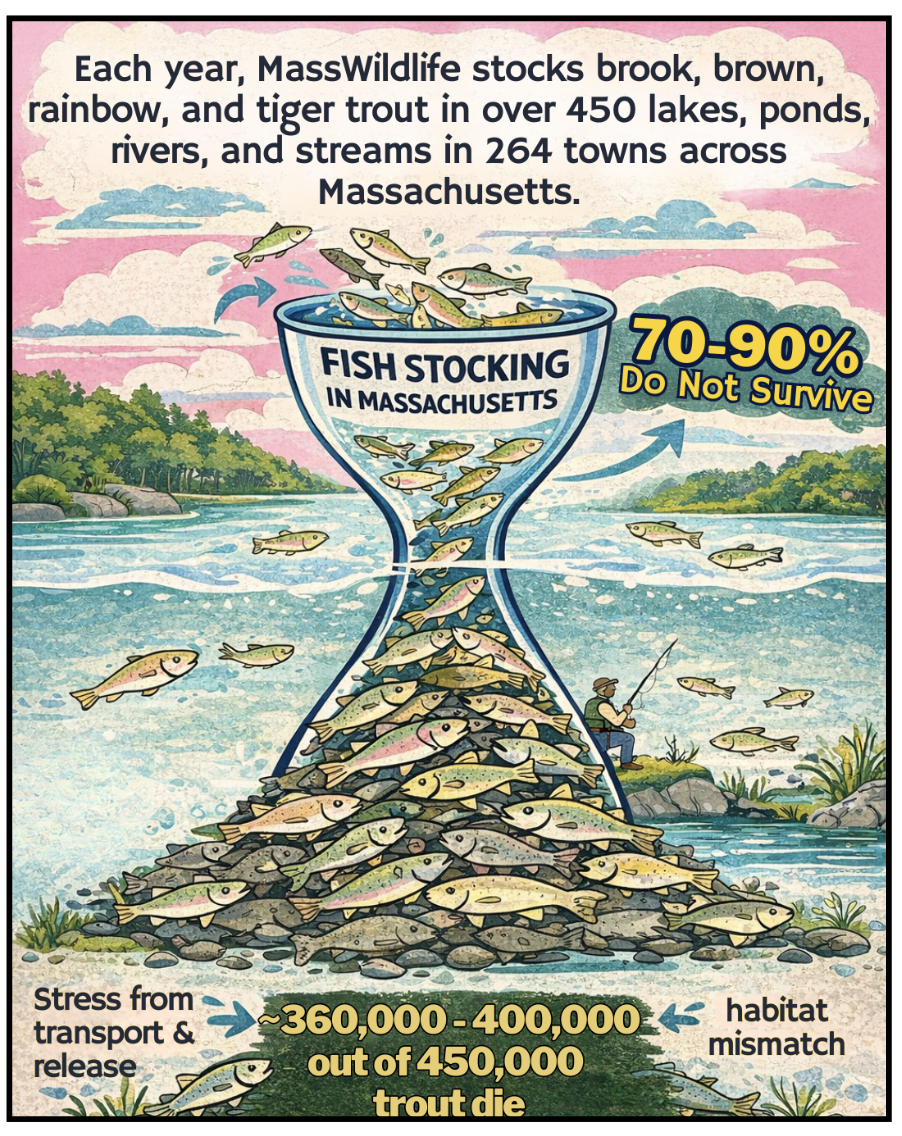
MassWildlife stocks over 500,000 fish each year, and by the department’s own admission, almost all of these fish die shortly after release.50 In numerous water bodies where stocking has occurred, non-native species populations have become established, with potential long-term ecological consequences.
One contributing factor to high mortality is competition: stocked fish are often outcompeted by wild fish and are poorly equipped to forage or survive in wild conditions.51 Hatchery fish are raised in ultra-controlled environments and often lack the experience and adaptations needed to survive in the wild. According to MassWildlife fish biologists, many stocked fish do not survive long after release and try to eat things like rocks and sticks because they are accustomed to being fed pellets.50
The high rate of fish mortality following stocking events raises additional concerns about a second source of nutrient pollution. Stocking introduces large volumes of fish into aquatic ecosystems all at once. When a significant portion of these fish die quickly, decompose, or are consumed in unnatural pulses, it can put further stress on aquatic ecosystems. Decaying fish biomass releases nitrogen into waterways and can contribute to eutrophication and oxygen depletion. Elevated nitrogen levels can lead to algal blooms, reduced dissolved oxygen, and degraded water quality and aquatic habitat; these conditions further harm native species and overall ecosystem health.20, 52
No Monitoring, No Accountability
There is inadequate research and oversight of fish stocking and no comprehensive monitoring in Massachusetts. Regardless of the millions of dollars funding the practice, and despite the scale of the program, MassWildlife has not conducted or published comprehensive studies on:
- The effects of stocking on native fish populations
- The impacts on aquatic macroinvertebrates and primary producers, which form the foundation of freshwater food webs
- Public perception of fish stocking (as opposed to biodiversity-supportive investment like habitat restoration, youth education, etc.)
Because research elsewhere shows significant harm to native fish, amphibians, and invertebrate communities, the absence of Massachusetts-specific studies represents a serious gap in oversight and accountability. MassWildlife has not adequately demonstrated that its practices do not cause ecological harm.
The agency has not demonstrated sufficient public support for routine stocking of non-native fish. BEAT has been interviewing anglers, river conservation groups, and other interested stakeholders, and conversations so far suggest that many prefer native fish and healthy habitat over put-and-take stocking programs. Without transparent public input or documented support from Massachusetts residents, continuing this practice raises questions about whose interests are being served.
Resources should be redirected toward habitat, restoration, and education
Funding and resources devoted to hatcheries, fish production, transportation, and repeated stocking events could instead be invested in strategies proven to support long-term ecosystem health. The Department of Fish and Game should redirect resources toward proven conservation strategies, including:
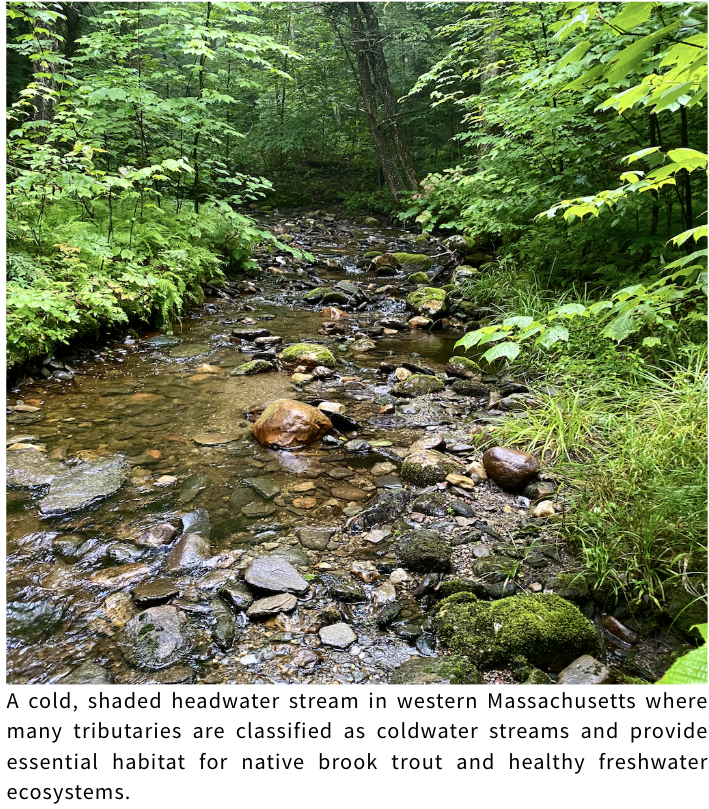
- Creating and restoring habitat that supports native brook trout and other native species
- Dam removal and improving stream connectivity
- Enhancing cold-water refuges and riparian shading
- Education, outreach, and public engagement on the importance of native biodiversity and healthy, sustainable ecosystems
- Supporting partnerships among agencies, nonprofits, and local stakeholders to address regional ecological threats
- Research and monitoring to guide adaptive management
- Restoring populations impacted by habitat modification, invasive species, or other disturbances
These approaches are consistent with recommendations from the Eastern Brook Trout Joint Venture and other conservation strategy working groups, and align with Massachusetts’ biodiversity goals to protect native species across their historic range.
However, restoration isn’t enough. Scientific research indicates that restoring habitat while still continuing to stock non-native brown and rainbow trout may be a futile effort. Numerous studies have demonstrated habitat restoration alone may unintentionally favor non-native trout, thereby supporting their populations as they continue to cause native biodiversity to decline.30, 36, 37 One study conducted in 2011 found that, after restoration of a Wisconsin brook trout stream, brook trout populations declined by 70%, while brown trout abundance increased more than 30-fold.53
What Experts and Conservation Groups Say
Scientific consensus strongly cautions against routine fish stocking:
- Approximately 83% of published research on fish stocking finds negative impacts on wild populations.57
- Conservation organizations including the Conservation Law Foundation and the Center for Biological Diversity have advocated for ending or sharply limiting the practice.58
- Angler organizations, such as Trout Unlimited and the Native Fish Coalition, have called for reducing or ending stocking in favor of habitat-based management.53, 59, 60, 61
Routine fish stocking is often presented as a beneficial conservation practice, yet decades of scientific research show it can undermine the very ecosystems it is intended to support. Massachusetts has committed itself to protecting biodiversity, conserving native species, and making science-based management decisions. Those commitments are at odds with routine stocking of non-native fish, especially in the absence of comprehensive ecological monitoring. Redirecting resources toward habitat restoration, watershed protection, native species conservation, and public educational programs about the impacts of fish stocking and the importance of healthy, sustainable ecosystems would provide lasting benefits for freshwater ecosystems and better reflect the Commonwealth’s stated conservation goals.
Take Action
Ask state officials to stop stocking non-native fish in your local waterbody.
Connecticut Valley District: (413) 323-7632
Central District: (508) 835-3607
Northeast District: (978) 772-2145
Southeast District: (508) 759-3406