Current Pipeline Proposals
New gas pipeline proposals continue to be filed in Massachusetts and across the Northeast. This page provides updates on projects that BEAT is currently following, information about the permitting process, and opportunities for public participation. Current opportunities to participate are listed within each project below. As new proposals are filed, this page will be updated with project information, public comment guides, hearing dates, and other ways to get involved.
Learn more about each proposal (Select Below)
Portland Natural Gas Transmission System Expansion
The Portland Natural Gas Transmission System (PNGTS)Status: Pending before the Federal Energy Regulatory Commission (FERC) under Docket No. CP26-553. Portland Natural Gas Transmission System has filed an application seeking authorization to expand its existing interstate pipeline network. FERC has not yet issued a decision on the proposal.
The Portland Natural Gas Transmission System (PNGTS) transports natural gas from Canada through Maine and New Hampshire to the interstate pipeline hub in Dracut, Massachusetts. The company has recently proposed an expansion of the system, adding another major gas infrastructure project to those already under review in New England.
The proposal has drawn attention because PNGTS includes a lateral pipeline serving the former paper mill site in Jay, Maine. The site had been proposed as the location of a large data center redevelopment project, although local officials reported in June 2026 that the original developer, Sentinel Data Centers, no longer planned to move forward with that proposal.
The project comes as federal regulators and grid operators are responding to rapidly growing electricity demand from large industrial facilities and data centers. In June 2026, FERC directed regional grid operators, including ISO New England, to develop plans for integrating new large electric loads while maintaining grid reliability.
BEAT is following this proposal because it would expand the interstate natural gas system serving New England at a time when energy demand forecasts are changing. As FERC reviews the application, state agencies, municipalities, Tribal Nations, organizations, and members of the public may have opportunities to comment on potential impacts to forests, wetlands, water resources, wildlife habitat, climate, and nearby communities.
- Project at a Glance
- Purpose: Expand the capacity of the existing Portland Natural Gas Transmission System.
- Location: Maine, New Hampshire, and Massachusetts.
- Applicant:Portland Natural Gas Transmission System.
- Key Connection: The pipeline system includes a lateral serving the former paper mill site in Jay, Maine, which had been proposed for redevelopment as a data center campus.
- Current Stage: Formal FERC review (CP26-553); the application is pending.
Algonquin Gas Transmission Enhancement (AGTE / R.A.R.E.)
AGT Enhancement (R.A.R.E.)Status: In FERC’s pre-filing environmental review process (Docket PF26-7-000). The initial public scoping period has closed, and Algonquin Gas Transmission has not yet submitted a formal application. Additional public comment opportunities are expected if the project moves into FERC’s formal certificate review.
The Algonquin Gas Transmission (AGT) Enhancement Project, also known as the Reliable, Affordable, Resilient Enhancement (R.A.R.E.) Project, is a proposed expansion of Enbridge’s existing interstate natural gas transmission system in Massachusetts, Rhode Island, and Connecticut. According to the applicant, the project would increase the system’s capacity by approximately 75 million cubic feet of natural gas per day to supply local gas distribution companies and improve winter reliability.
The proposal includes replacing approximately 8.25 miles of existing 16-inch pipeline with 36-inch pipeline in Mendon, Bellingham, Franklin, and Wrentham, Massachusetts, and Cumberland, Rhode Island. It would also construct approximately 5.2 miles of new looping pipeline in Burrillville, Tiverton, and Little Compton, Rhode Island, and increase compression through software upgrades at the existing Cromwell Compressor Station in Connecticut. The project would be constructed primarily within or adjacent to existing pipeline rights-of-way.
BEAT is following this proposal because it would increase the capacity of the interstate gas transmission system serving New England. During FERC’s review, state agencies, municipalities, Tribal Nations, organizations, and members of the public have opportunities to comment on potential impacts to wetlands, forests, wildlife habitat, water resources, climate, and nearby communities before a formal application is filed.
Algonquin Gas Transmission recently submitted its draft Resource Reports Nos. 1 through 12 for the Project.
- Project at a Glance
- Purpose: Increase the capacity of the existing Algonquin Gas Transmission system.
- Location: Massachusetts, Rhode Island, and Connecticut.
- Applicant: Algonquin Gas Transmission, LLC (Enbridge).
- Key Components: Replacement of approximately 8.25 miles of pipeline, construction of approximately 5.2 miles of looping pipeline, and software upgrades at the existing Cromwell Compressor Station.
- Current Stage: FERC pre-filing environmental review (PF26-7-000); no formal certificate application has been submitted.
Algonquin Cape Cod Replacement Project
AGT – Cape Cod Canal Pipeline Relocation ProjectStatus: Under FERC review (Docket CP25-552). July 9 2026, the Massachusetts Executive Office of Energy and Environmental Affairs (EEA) completed its environmental review under the Massachusetts Environmental Policy Act (MEPA) by issuing a Certificate on the project’s Final Environmental Impact Report (FEIR). This concludes the project’s MEPA review but does not authorize construction. The project must still complete FERC’s review and obtain any remaining federal, state, and local permits before construction could begin. The public comment period on FERC’s Environmental Assessment has closed, and FERC has not yet issued a final decision
Latest Update (July 2026): Massachusetts has completed environmental review under the Massachusetts Environmental Policy Act (MEPA) by issuing a Certificate on the project’s Final Environmental Impact Report (FEIR). This concludes the MEPA review process but does not authorize construction. The project remains under review by FERC and continues through additional permitting processes.
The Cape Cod Canal Pipeline Relocation Project is proposed by Algonquin Gas Transmission (AGT), an Enbridge subsidiary, to relocate existing interstate and local gas pipelines as part of the Massachusetts Department of Transportation’s replacement of the Bourne and Sagamore Bridges. The project would remove existing pipeline infrastructure attached to the bridges and construct new pipeline segments beneath the Cape Cod Canal using horizontal directional drilling. The proposal also includes new and relocated metering and regulating stations.
While relocating the pipelines may be necessary to accommodate bridge replacement, BEAT and other organizations have raised concerns that the proposal would replace existing 10-inch, 270 psi National Grid pipelines with 16-inch and 18-inch pipelines operating at up to 750 psi. The project also includes additional metering stations and other facilities that could increase the capacity of the gas transmission system. Given Massachusetts’ statutory commitment to achieve net-zero greenhouse gas emissions by 2050, BEAT believes any replacement project should be designed to maintain existing service rather than facilitate future expansion of fossil fuel infrastructure.
In June 2026, FERC released its Environmental Assessment (EA), concluding that the project would not constitute a major federal action significantly affecting the quality of the human environment. The EA evaluates the relocation of existing facilities, construction of approximately 5.7 miles of new pipeline, abandonment of older pipeline segments, and installation of new metering and regulating stations. Public comments on the Environmental Assessment closed on June 29, 2026.
- Project at a Glance
- Purpose: Relocate existing gas pipelines to accommodate replacement of the Bourne and Sagamore Bridges.
- Location: Bourne, Massachusetts (Cape Cod Canal).
- Applicant: Algonquin Gas Transmission, LLC (Enbridge).
- Key Components: New pipeline installed beneath the Cape Cod Canal, four new or relocated metering and regulating stations, abandonment of existing bridge-mounted pipeline segments, and associated infrastructure.
Constitution Pipeline
Constitution PipelineStatus: Under FERC review (Docket CP13-499-006). On August 21, 2026, FERC issued an Environmental Assessment (EA) for the Constitution Pipeline and related Wright Interconnect Project. The EA is now open for public comment through September 21, 2026 at 5:00 p.m. ET. FERC has not yet issued a final decision on the companies’ requests to reauthorize the projects, and neither project is approved for construction.
Latest Update (August 2026): FERC’s Environmental Assessment evaluates the potential environmental effects of constructing and operating the Constitution Pipeline and Wright Interconnect. FERC staff concluded that approval of the projects, with the mitigation measures identified in the EA, would not constitute a major federal action significantly affecting the quality of the human environment. Members of the public may submit comments on the EA through September 21, 2026. BEAT is preparing a public comment guide to help people review the EA and participate in the proceeding.
The Constitution Pipeline is a proposed approximately 125-mile, 30-inch-diameter interstate natural gas pipeline that would transport up to 650,000 dekatherms of gas per day from Susquehanna County, Pennsylvania, through New York to the Wright Compressor Station in Schoharie County. The project would also include two new meter stations, ten communication towers, eleven mainline valves, access roads, contractor yards, and other associated facilities.
At Wright, the pipeline would connect with the related Wright Interconnect Project and the existing Iroquois Gas Transmission System. These connections could allow additional gas to enter the interstate pipeline network serving New England.
The project was originally proposed in 2012 and received a Certificate of Public Convenience and Necessity from FERC in 2014. Construction did not proceed after the New York State Department of Environmental Conservation denied the project’s Clean Water Act Section 401 Water Quality Certification. The project was withdrawn in 2020, and its federal certificate was later vacated.
In late 2025, Constitution Pipeline Company petitioned FERC to reissue its previous certificate and related authorizations. Iroquois Gas Transmission System is also seeking authorization for the related Wright Interconnect Project. FERC is reviewing the two projects together because they are designed to operate as connected infrastructure. The current Environmental Assessment is part of that review.
-
Project at a Glance
- Length: Approximately 125 miles
- Route: Susquehanna County, Pennsylvania to Schoharie County, New York
- Capacity: 650,000 dekatherms per day
- Connects to: Tennessee Gas Pipeline and Iroquois Gas Transmission at the Wright Compressor Station
- Current Status: FERC Environmental Assessment issued August 21, 2026; public comments due September 21, 2026 at 5:00 p.m. ET; FERC has not issued a final decision.
- View BEAT’s Public Comment Guide for these dockets
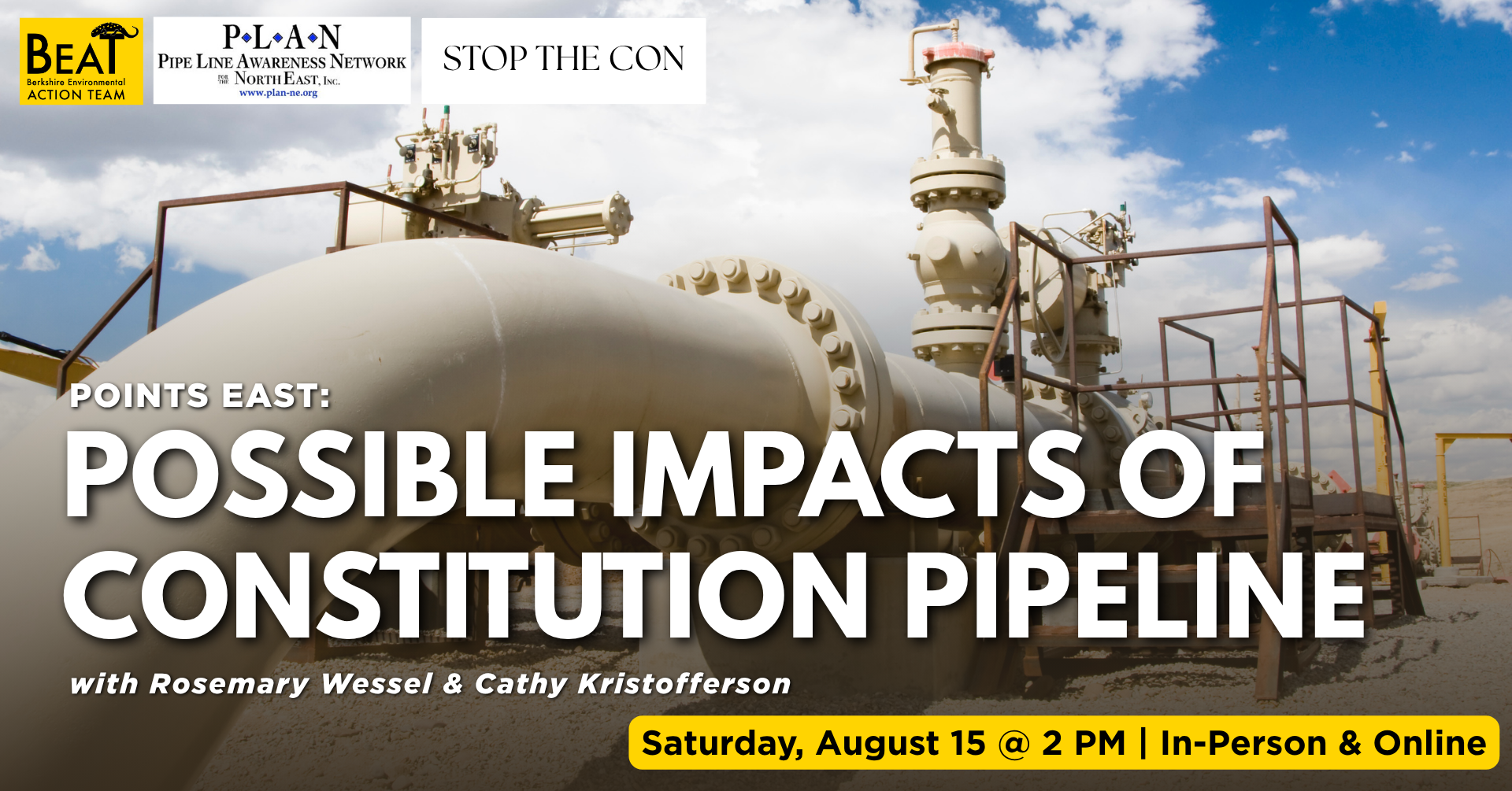


- FERC Environmental Assessment Comments
Agency: Federal Energy Regulatory Commission (FERC)
- Docket: CP13-499-006 and CP18-5-004
- Deadline: September 21, 2026
- View the Environmental Assessment
- BEAT Comment Guide
Why BEAT Works on Pipeline Proposals
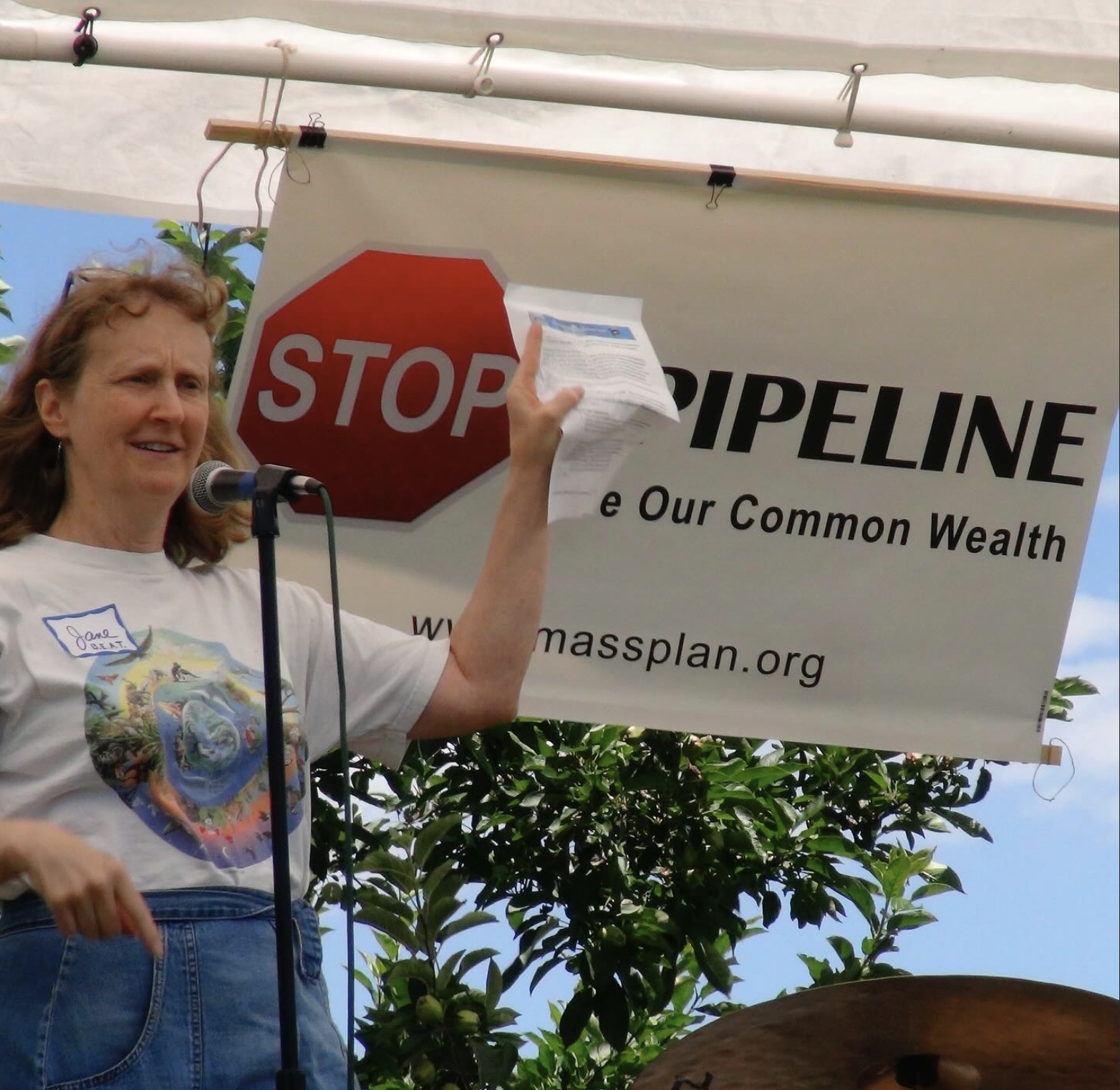
Every proposed interstate gas pipeline is reviewed through state and federal permitting processes. These reviews help determine whether a project meets legal requirements and how it may affect wetlands, forests, waterways, wildlife habitat, climate, public health, cultural resources, private property, and local communities. They also provide opportunities for residents, municipalities, Tribal Nations, and organizations to submit comments that become part of the public record.
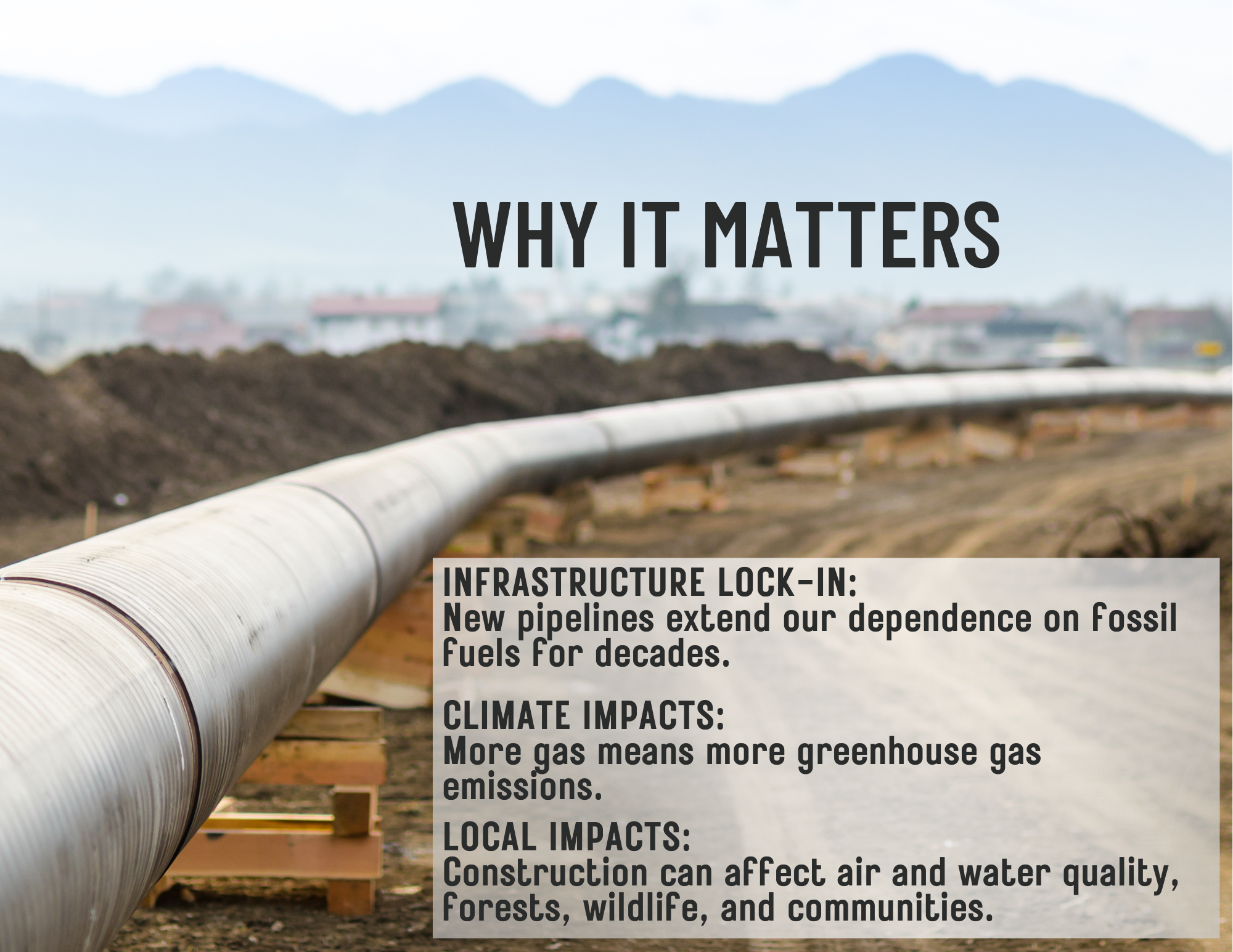
For more than a decade, Berkshire Environmental Action Team (BEAT) has helped communities understand proposed fracked gas pipelines and other fossil fuel infrastructure. We explain permitting processes, prepare educational resources, and help people participate in public review.
BEAT’s pipeline work began during the proposed Kinder Morgan Northeast Energy Direct (NED) pipeline, which would have crossed 28 Massachusetts communities, including several in Berkshire County. Throughout that review, BEAT worked with residents, municipalities, and partner organizations to explain the proposal, host public meetings, and encourage participation in agency comment periods.
The response to the proposed Northeast Energy Direct pipeline led to the creation of No Fracked Gas in Mass, a statewide pipeline education and advocacy campaign that initially operated in partnership with BEAT. The campaign later became an official BEAT program and now continues as part of BEAT’s Clean Energy & Infrastructure program.
Since the NED proposal, BEAT has participated in reviews of numerous pipeline and gas infrastructure projects throughout Massachusetts and the Northeast. We review project filings, develop public comment guides, submit technical comments during regulatory proceedings, and work with regional and statewide partners to explain proposed projects and opportunities for public input. This work includes proceedings before the Federal Energy Regulatory Commission (FERC), the Massachusetts Environmental Policy Act (MEPA) Office, the Massachusetts Department of Public Utilities (DPU), and other state and federal agencies.
BEAT works to make technical information easier to understand so residents can follow permitting proceedings, evaluate proposed projects, and participate in decisions that affect their communities.
- Over the past decade, BEAT has participated in reviews of several major gas infrastructure proposals, including:
- Northeast Energy Direct (NED)
- Atlantic Bridge
- Constitution Pipeline
- Berkshire Gas expansion proposals
- Algonquin expansion projects
- Constitution Pipeline and Tennessee Gas Pipeline system expansion (Pioneer Valley)
Many of these projects were modified, withdrawn, or denied after extensive public review and regulatory proceedings.
Understanding the Permitting Process
Most interstate natural gas pipelines are reviewed by the Federal Energy Regulatory Commission (FERC). Depending on the project, state agencies—including the Massachusetts Environmental Policy Act (MEPA) Office, the Massachusetts Department of Environmental Protection (MassDEP), and other permitting agencies—may also review environmental impacts.Public participation occurs throughout the permitting process.
While every project is different, most follow these general steps:
1. A company announces a proposed project
A pipeline company develops a proposal and identifies a preferred route or construction plan.
Example: Enbridge’s proposed Algonquin Gas Transmission Enhancement (R.A.R.E.) Project would replace portions of existing pipeline with larger-diameter pipe, add looping segments, and increase system capacity across Massachusetts, Rhode Island, and Connecticut.
2. Pre-filing and early public review
For many interstate projects, FERC opens a pre-filing process before a formal application is submitted. Agencies, municipalities, Tribal Nations, landowners, organizations, and the public can identify issues that should be considered during environmental review.
Example: During the R.A.R.E. pre-filing process, BEAT prepared public comment guides and encouraged residents to submit comments regarding wetlands, forests, climate impacts, water resources, wildlife habitat, and environmental justice concerns.
3. Formal application
If the company decides to proceed, it files a formal application with FERC requesting a Certificate of Public Convenience and Necessity. The application includes engineering plans, environmental reports, route maps, and information intended to demonstrate the project’s need. Not every proposal reaches this stage.
4. Environmental review
FERC evaluates the proposal and prepares either an Environmental Assessment (EA) or, for projects with potentially greater impacts, an Environmental Impact Statement (EIS) under the National Environmental Policy Act (NEPA).
State agencies may conduct additional environmental review or issue permits under state law.
Example: For the Cape Cod Canal Pipeline Relocation Project, FERC prepared an Environmental Assessment and requested public comments before completing its review.
5. Public comment periods
Throughout environmental review, FERC and state agencies may open public comment periods. Comments become part of the administrative record considered during agency decision-making.
6. Agency decisions
FERC decides whether to approve, deny, or approve a project with conditions. State agencies make separate decisions on permits that may be required under state and federal environmental laws. Approval by one agency does not automatically satisfy every required permit.
7. Rehearing and judicial review
After FERC issues a decision, parties may request rehearing. In some cases, FERC’s decisions may also be reviewed by the federal courts.
Example: The Constitution Pipeline received a FERC certificate in 2014 but was never constructed after New York denied the project’s Clean Water Act Section 401 Water Quality Certification. Following years of litigation, the project was withdrawn in 2020, and FERC’s original certificate was later vacated. The project is now before FERC again through a petition seeking to reissue that certificate.
8. Construction and compliance
If a project receives all required federal and state approvals, construction may begin. Agencies continue to oversee compliance with permit conditions, environmental mitigation measures, restoration requirements, and ongoing monitoring. Not every approved project is ultimately constructed.
Example: The proposed Northeast Energy Direct (NED) pipeline never reached construction. Following extensive public participation, regulatory review, and changing market conditions, Kinder Morgan suspended the project in 2016.