
- This event has passed.
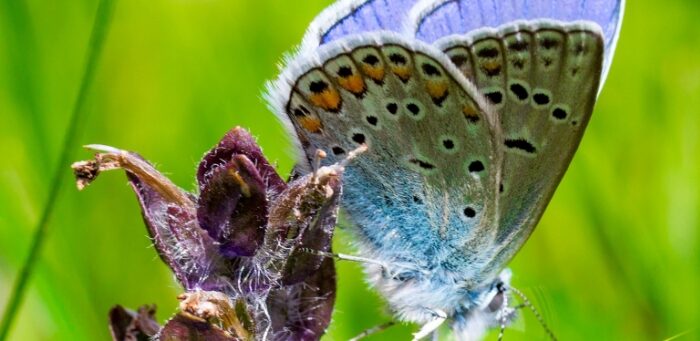
The Armadillos are Moving, but the Karner Blues are Trapped: Neonatives, Managed Relocation, and What to Do About Wildlife Climate Refugees
For decades ecologists have used native and local seeds or organisms from specific regions, following the best ecological practices. This approach makes sense because plants and animals from local counties and states are more likely to thrive since they have adapted to the climate, soil, biotic communities, and natural disturbance regime of the area.
While this practice has been effective for land managers, it’s clear that new best practices are needed. These will likely incorporate both traditional methods like relocating plants and animals, and newer techniques that focus more on genetics. We may also need to reframe our goals by viewing some invasive species as refugees that can potentially contribute to the ecosystem.
Dr. Hoving has been the statewide climate adaptation program lead for the Michigan DNR Wildlife Division for 13 years. He is a member of the Association of Fish and Wildlife Agencies Climate Adaptation Working Group and the Karner Blue Butterfly Recovery Working Group. He served as an advisor to the Secretary of the Interior on the Advisory Committee for Climate Adaptation Science from 2023-2025. His professional interests include landscape ecology, disturbance ecology (especially fire), historical ecology, and modeling resilience of complex adaptive systems. He is an avid native plant gardener, hiker, reader, and board game aficionado.
DATE: Wednesday, July 9
TIME: 3:00 PM – 4:00 PM
LOCATION: Online