We will be upgrading our website. Watch for major changes starting in January. Until then, some links may not work properly.
2nd Annual Wildlife Trackers Conference
was a great success. Pictures are up on BEAT's Facebook wall while we work on repairing our website.BEAT has a couple projects that we need volunteers to help with
One is on the internet - adding up the fines that the Massachusetts Department of Environmental Protection issued in 2004, 5, 6, 7, and 8. We are looking to see any changes year to year, as well as how this relates to their budget. Here is the link to the website where the information can be found.
The other project is more complicated. We need someone to go into the engineering department in the City of Pittsfield to get copies of the plans showing all the stormdrains and pipes leading to the culvert next to Dominos Pizza on upper North Street that dumps sediment laden stormwater into the east branch of the Housatonic River. (see google map of the culvert location) The engineering department is very helpful, but you will have to look carefully to be sure you have ALL the stormdrain locations. BEAT will pay for the copies of the plans.
If you would be interested in volunteering to do either project, please contact Jane.
You can take a look at all our volunteer opportunities on the "Volunteer" webpage.
September 26, 2009 River Cleanup
Thank you to all those who helped!
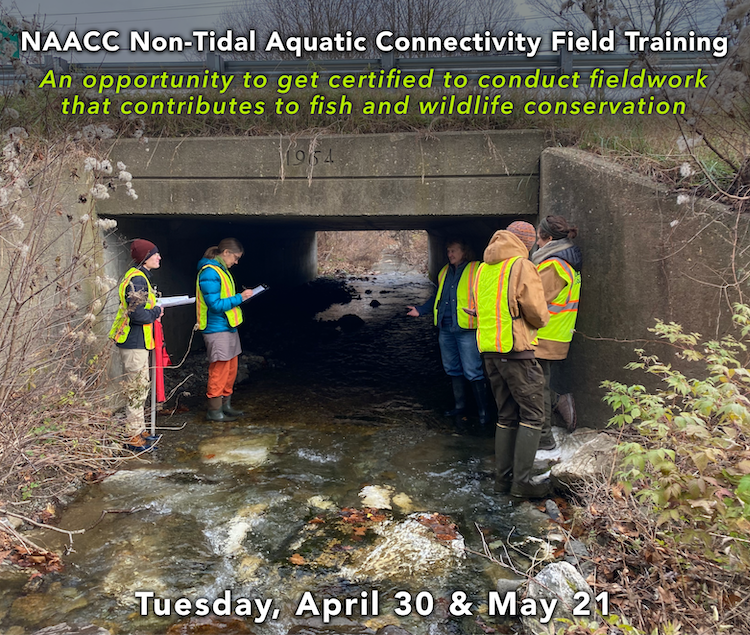
Stream Crossing Surveys
We are surveying culverts around the county in an effort to make every major road repair an opportunity to improve ecosystem and habitat connectivity to help wildlife cross roads safely.
As roads are repaired, all crossings must be "suitably culverted, bridged, or otherwise designed to withstand and to prevent the restriction of high flows, and so as not to obstruct the movement of aquatic life indigenous to the waterbody" in order to receive a Category 1 (non-reporting) Army Corps of Engineers permit. What this jargon means - to get the easy permit, your crossing must allow highwater flows and aquatic wildlife to pass easily under the road.
BEAT believes that to meet the standard above, the crossing must meet the General or Optimum Crossing Standards of the Massachusetts River and Stream Crossing Standards (pdf 111KB).
Additionally, we would like to see provisions made for terrestrial wildlife appropriate to the wildlife in the area, the size (volume of cars) of the road, and the topography. Often it appears to us that putting in a larger crossing just makes obvious sense to keep deer or other animals off the road.
Thank you to the TransWild Alliance and others who made it possible for BEAT to attend the International Conference on Ecology and Transportation. It was a very informative week!!
Read more about what BEAT is doing on our Road Ecology page.
License Plates Fund BEAT's Effort to Make Roads More Environmentally Friendly
BEAT received a financial boost for our work to ensure that every major road repair is an opportunity to help connect wildlife habitat and ecosystems. BEAT received $21,819 from the Massachusetts Environmental Trust.
According to Trust Director Dorrie Pizzella, the Trust will provide over $500,000 in grants to more than 30 organizations this year, thanks to motorists who choose to purchase one of the Trusts’ three special license plates: the Right Whale & Roseate Terns, the Leaping Brook Trout, or the Blackstone Valley Mill. “You purchase a plate from the Registry of Motor Vehicles and half the registry fee is donated to the Trust to fund water-focused environmental education and protection programs,” said Pizzella.
“Every major road repair is an opportunity to make that road more friendly to wildlife,” says Jane Winn, Executive Director of BEAT. “We are grateful to the Trust for supporting our work.”
Our transportation network has fragmented wildlife habitat resulting in hot spots of road kill – from deer and bear to turtles and frogs. In many places, the culverts that carry water under our roads won’t even allow fish to swim upstream. BEAT will be trying to identify roads that may undergo major repair in the coming years, survey the existing bridges and culverts to see if they adequately allow fish and wildlife to cross under the road, and map the problem crossings. BEAT hopes to identify places in need of better culverts early enough that they can be incorporated without adding significant expense – or early enough that different funds may be accessed to provide for better crossings.
When you purchase a new car or renew your registration with the Registry of Motor Vehicles, you can help preserve environmental education, conservation, or public awareness efforts. The plates cost $76, which includes a $40 tax deductible donation to the Trust. There is a renewal fee of $81 every two years. Visit your local Registry or order a plate online at www.mass.gov/rmv; or log onto www.MassEnvironmentalTrust.org where you can learn more about the Trust, the programs it supports, and the specialty license plate offerings.
PCB Cleanup Underway - or not - next to Dorothy Amos Park
September 2009
Work has started! Check out our web page about the Dorothy Amos Park cleanup.
August 2009
Still no work, but the pipes are back. At this time of year there is usually very low flow in the streams and rivers, but not this year! Will GE really be able to remediate the river at Dorothy Amos Park? And how much of the PCB laden sediment flowed downstream in the heavy flows this year?
January 2009
Work could not proceed because the water was too high in the river. Both Onota Lake and Pontoosuc lake were being drawn down. BEAT has asked to be notified when work recommences.October 2008
Work has begun on the long-awaited cleanup of PCBs from the river sediments and bank soils adjacent to Dorothy Amos Park on West Street in Pittsfield. Although we are really frustrated that it took ten years from the time GE remediated Dorothy Amos Park to the time they are starting to remediate in the river next to the Park, BEAT is really glad that the park remained open all summer.
For more information and pictures, see our West Branch page.
November 2008 - Massachusetts Wildlife Trackers Conference
BEAT co-sponsored the Massachusetts Wildlife Trackers Conference, November 1, 2008, at the Doyle Conservation Center in Leominster, MA. The incredibly successful event drew more than 90 people and a good time was had by all. See the Mass. Wildlife Trackers website for more information. We look forward to doing this again next year. If you would like to be on the mailing list to receive notice of next year's conference, please email Jane and ask to be on the MWTC mailing list.